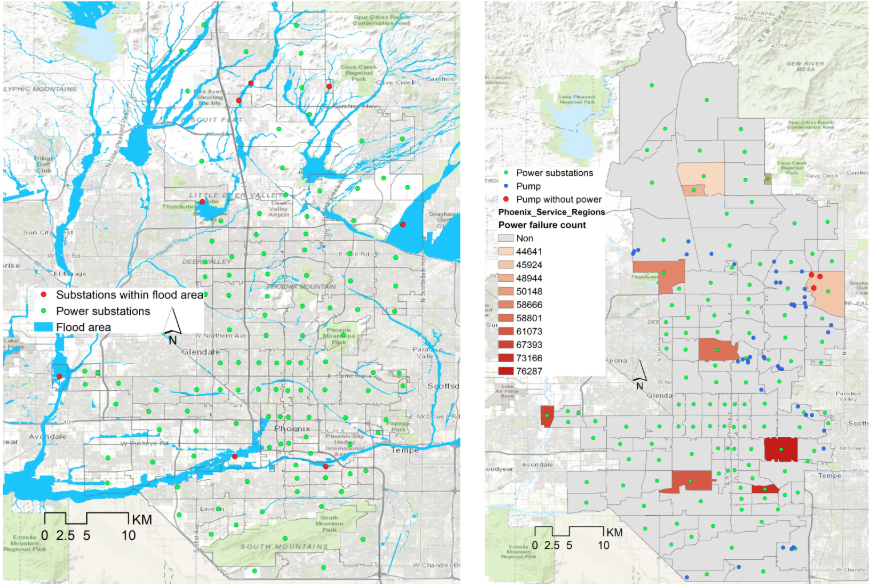
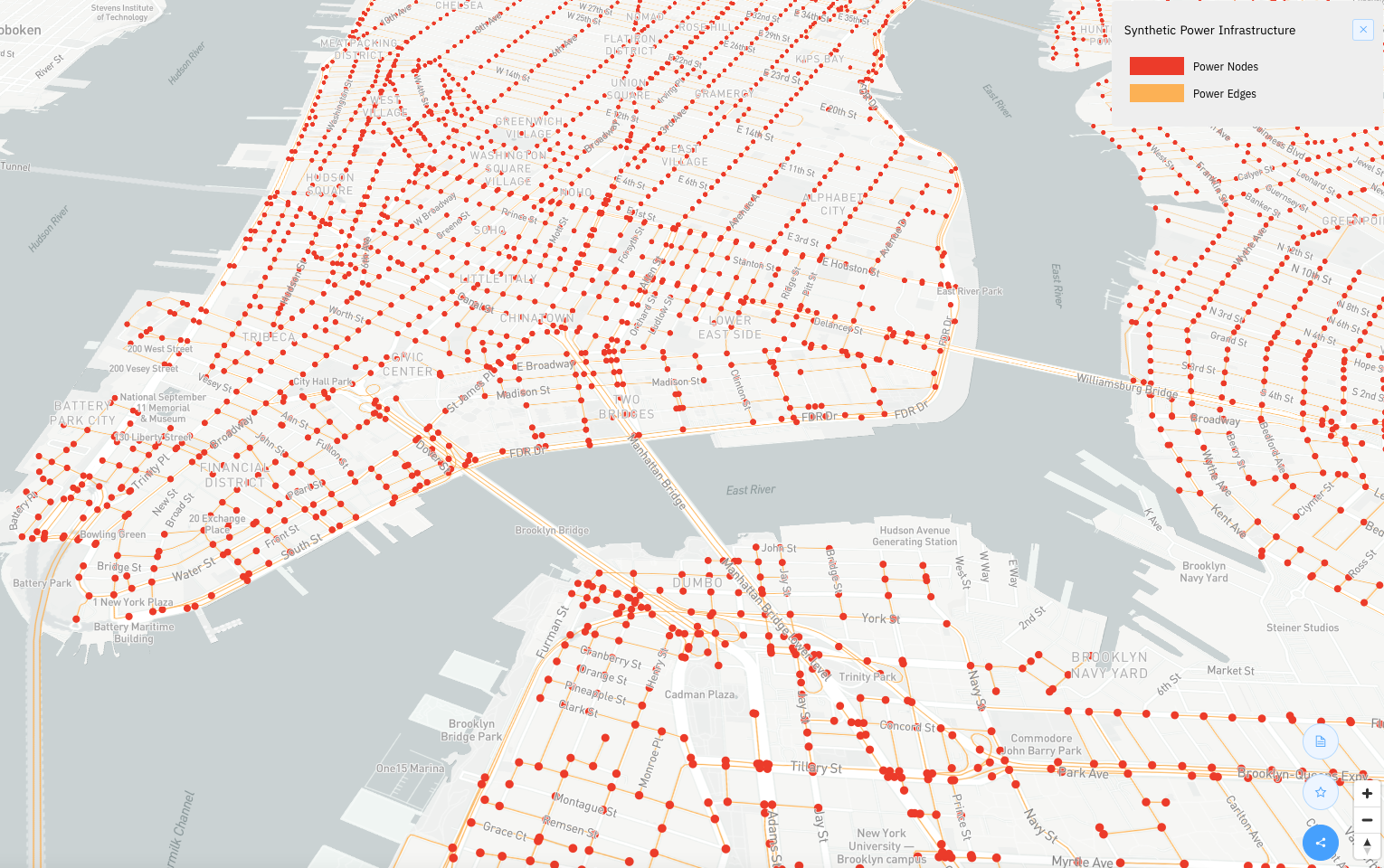
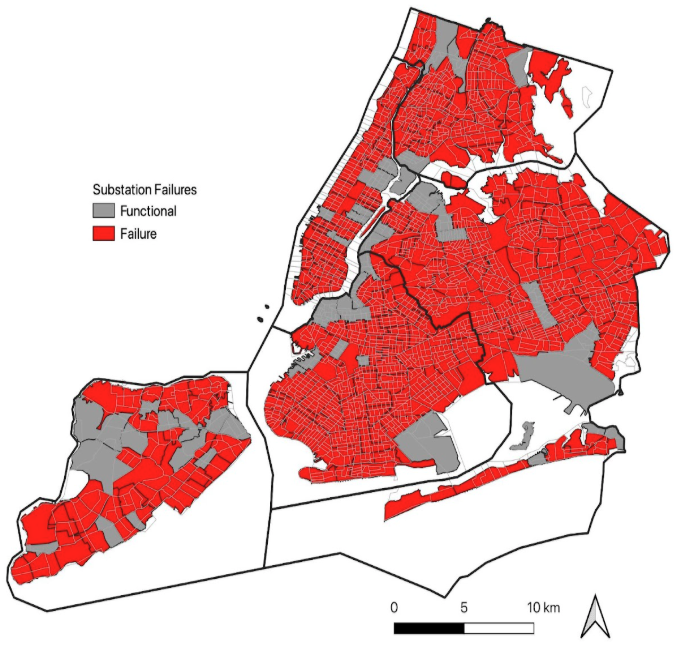
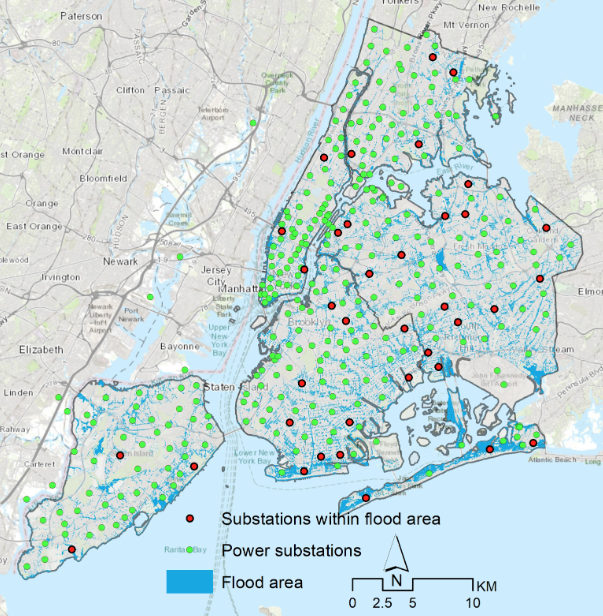
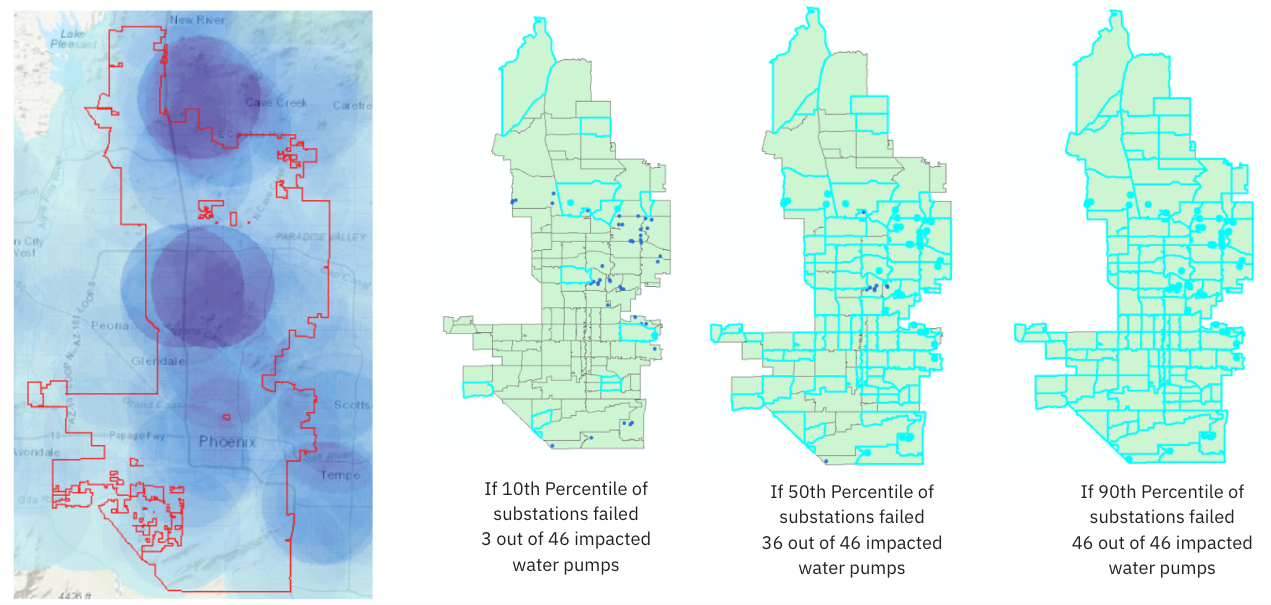
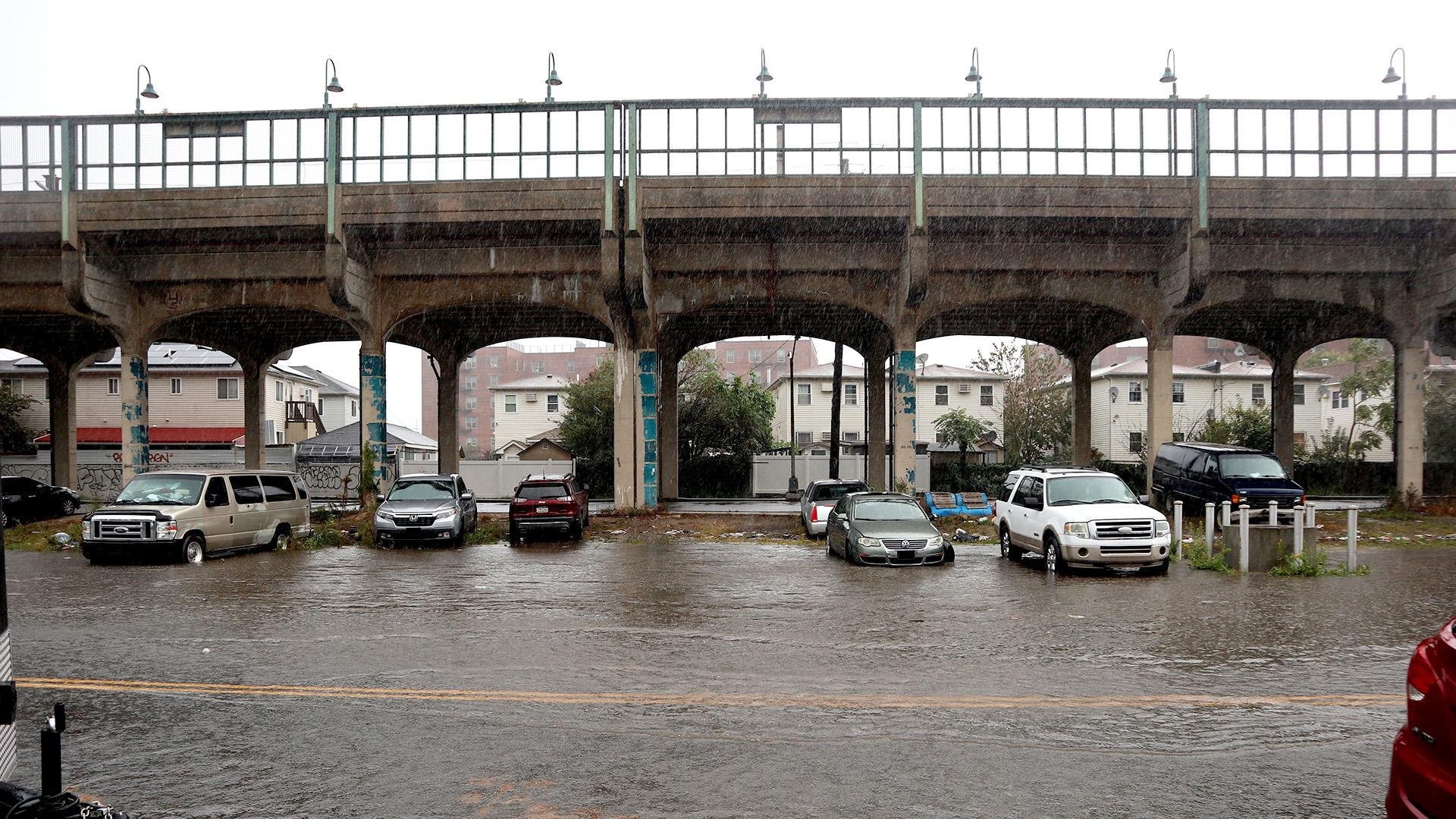
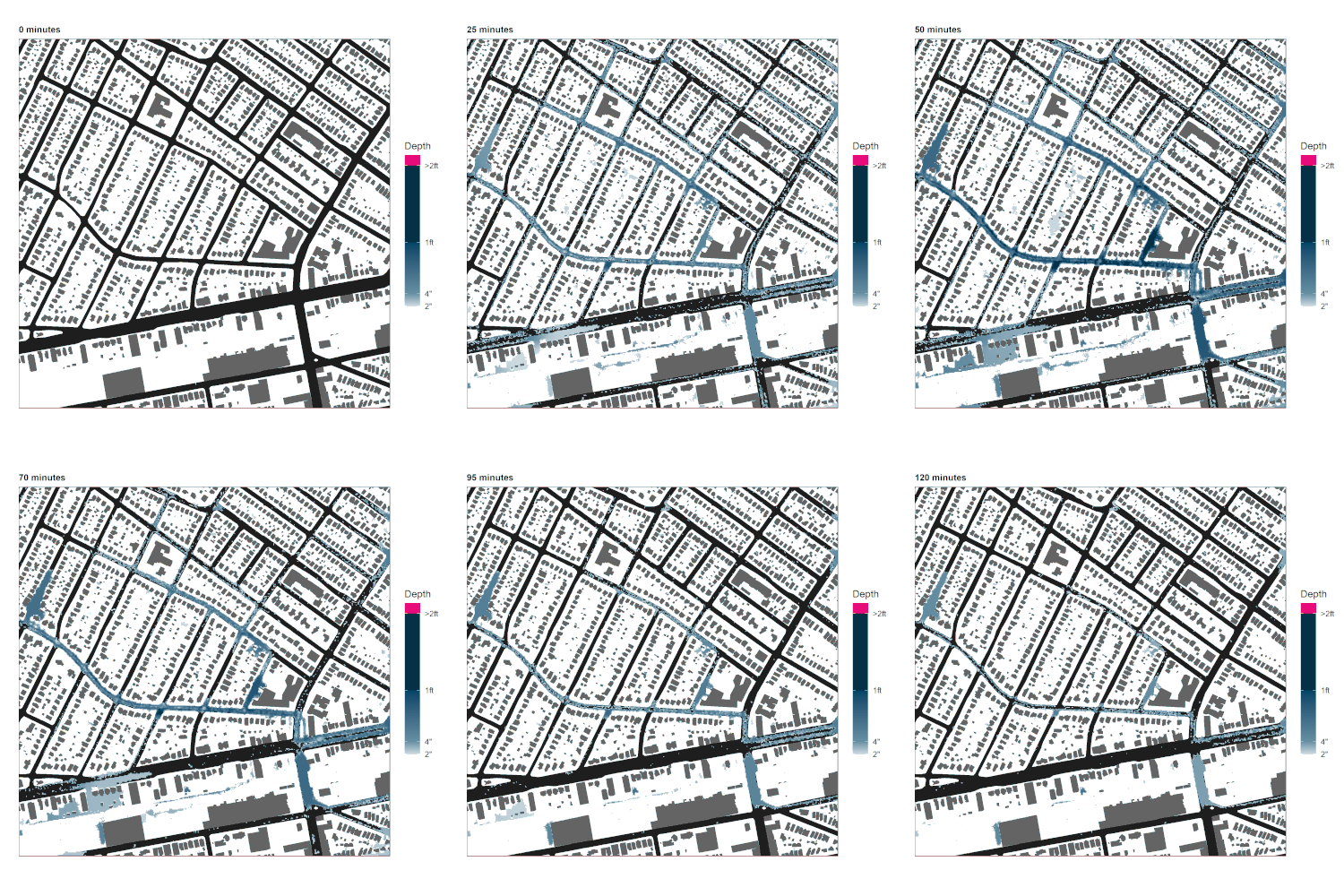
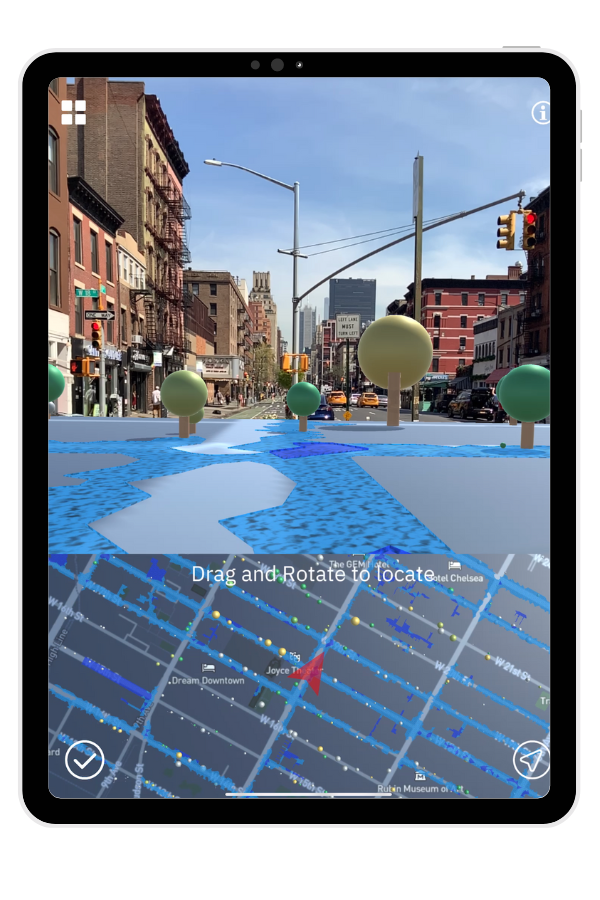
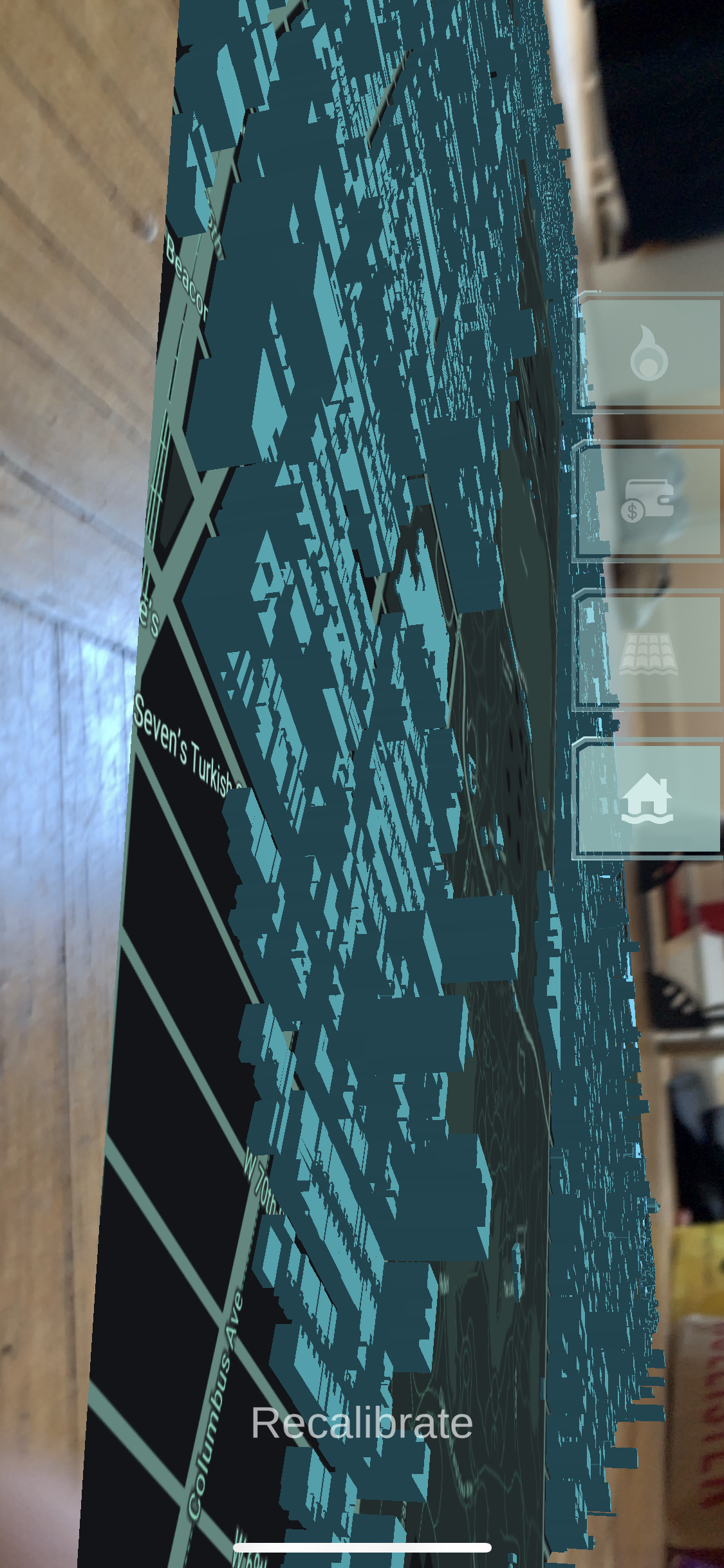
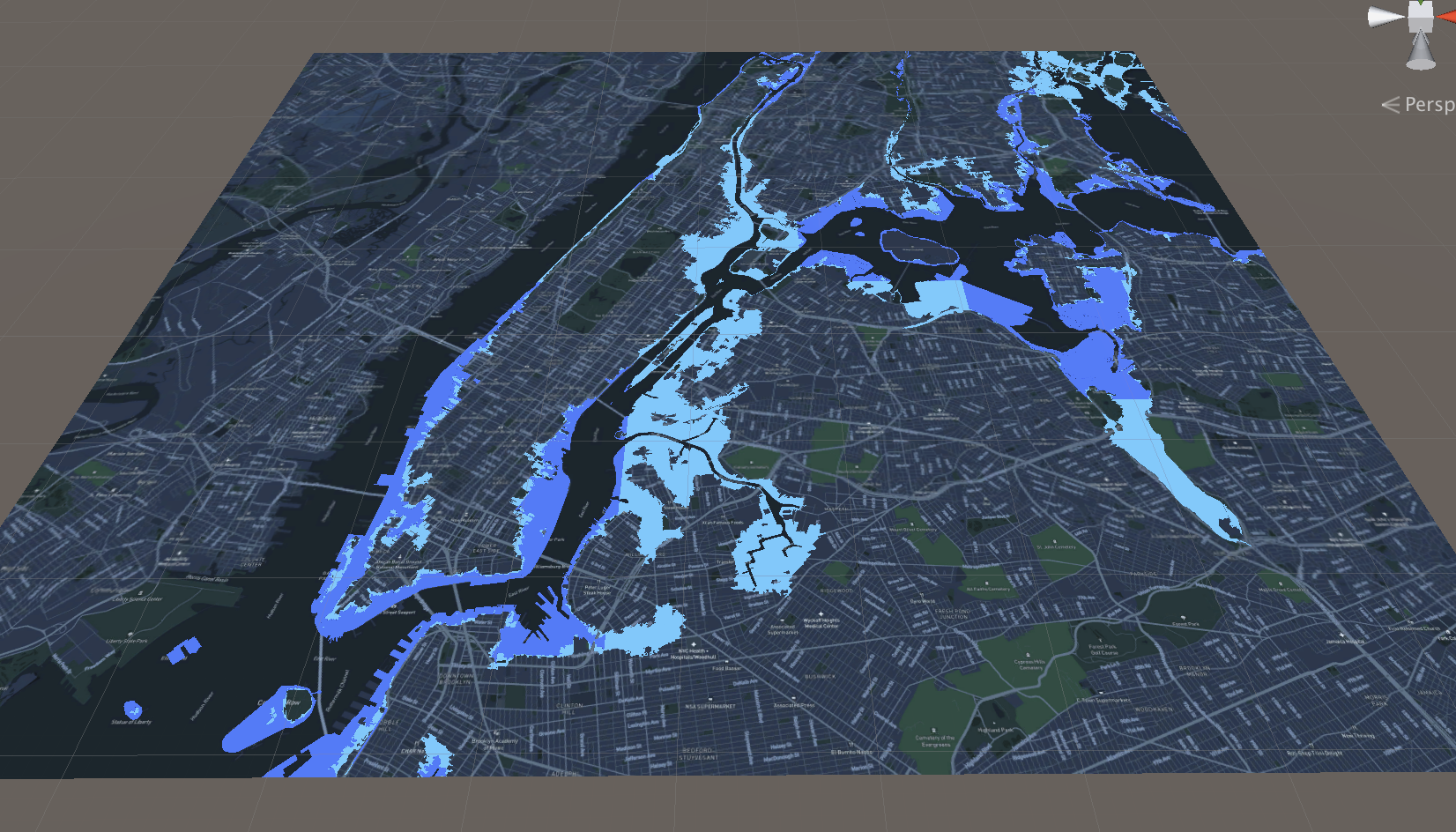
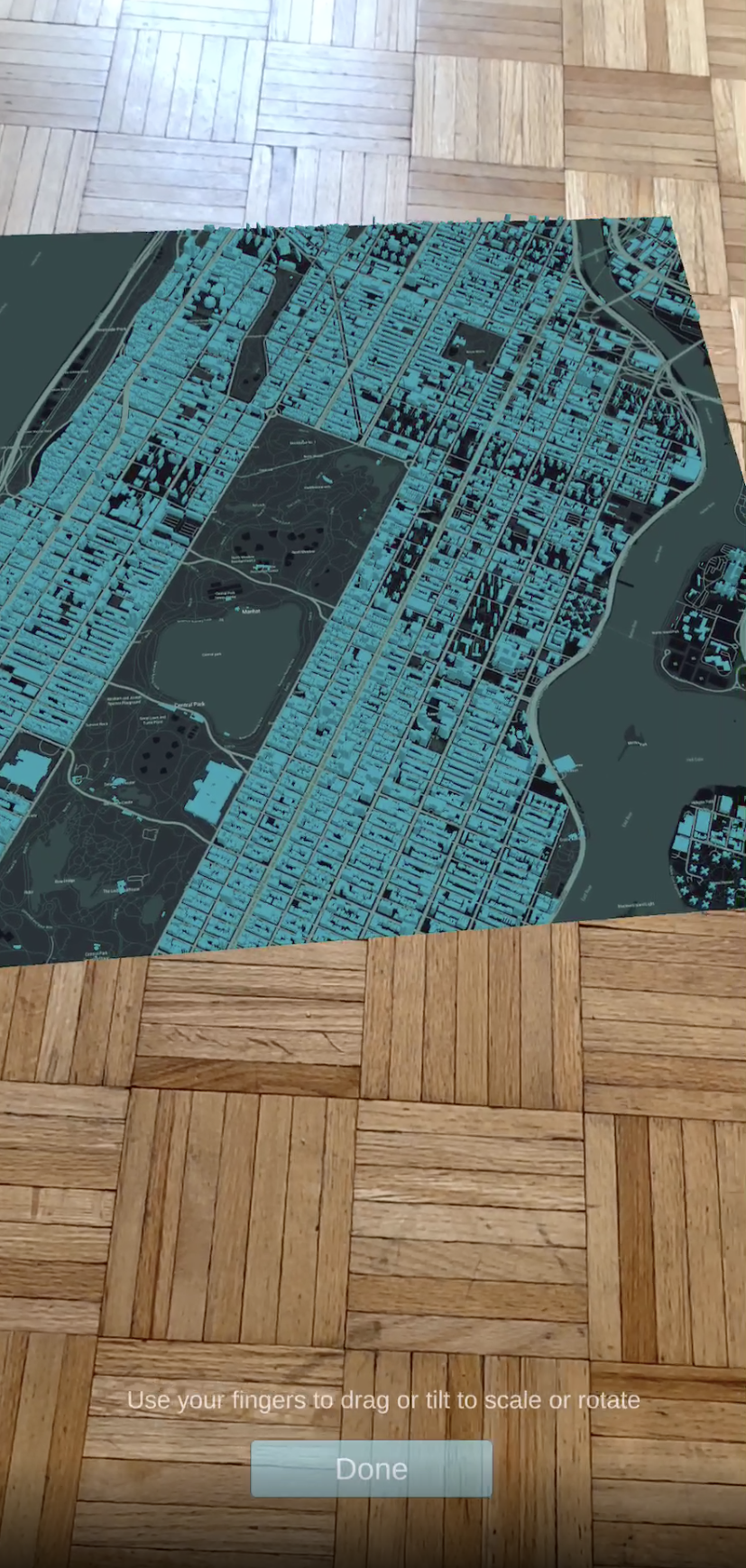
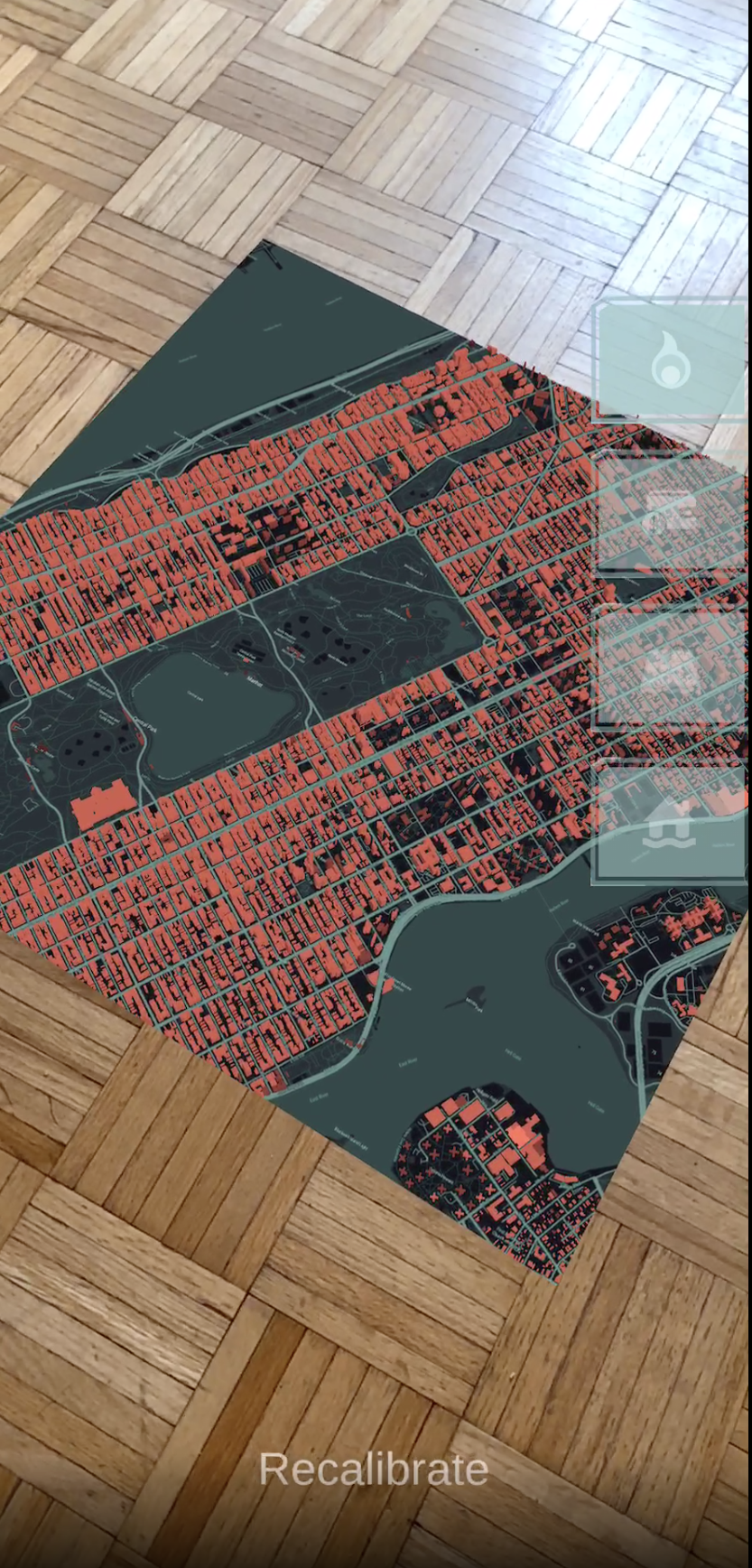
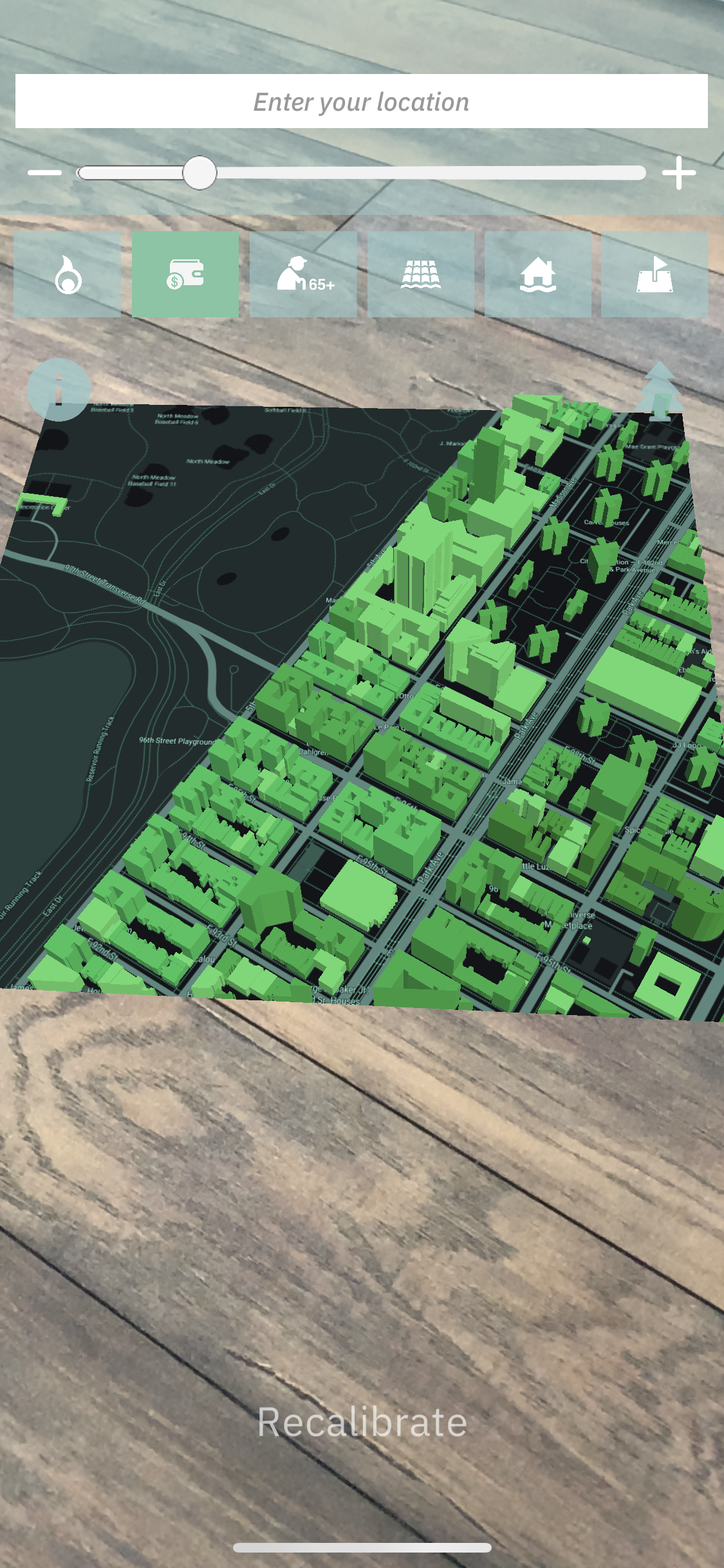
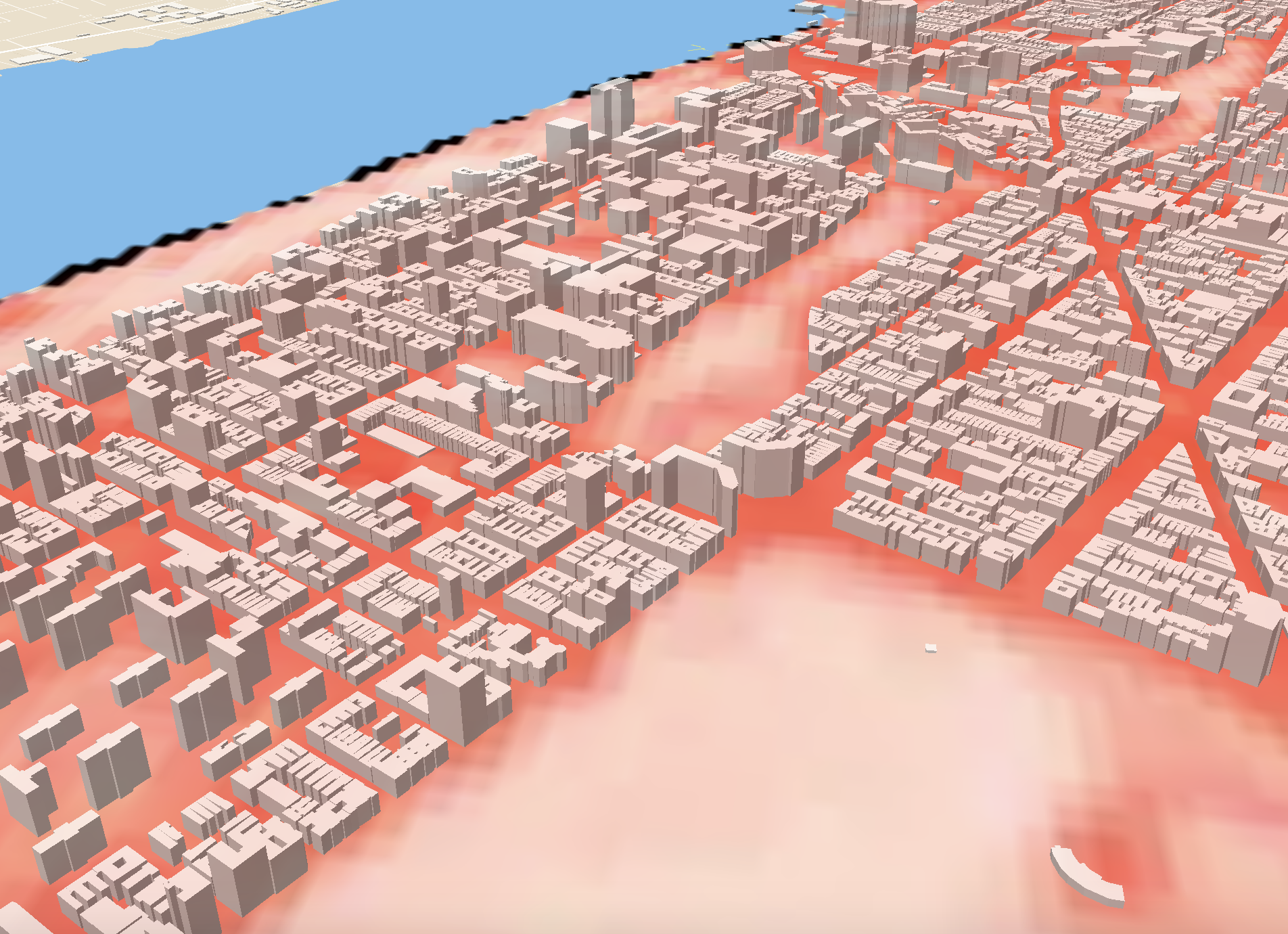
Using advanced synthetic modeling methods, the team constructed coupled power and water distribution networks and ran hundreds of thousands of failure simulations to identify which substations and pumping stations are most vulnerable. In New York City, simulations showed that about 10% of power substations are flood-prone and that failures at a small number of critical pumping stations—especially in Queens—could cut water access for more than one million residents under high-risk scenarios. Additional analysis integrating social vulnerability revealed strong spatial inequities: Queens hosts the weakest critical infrastructure systems and the highest vulnerability to compounding failures, while the Bronx—though socially vulnerable—benefits from comparatively secure water infrastructure. Manhattan and Staten Island exhibited the lowest overall risk.
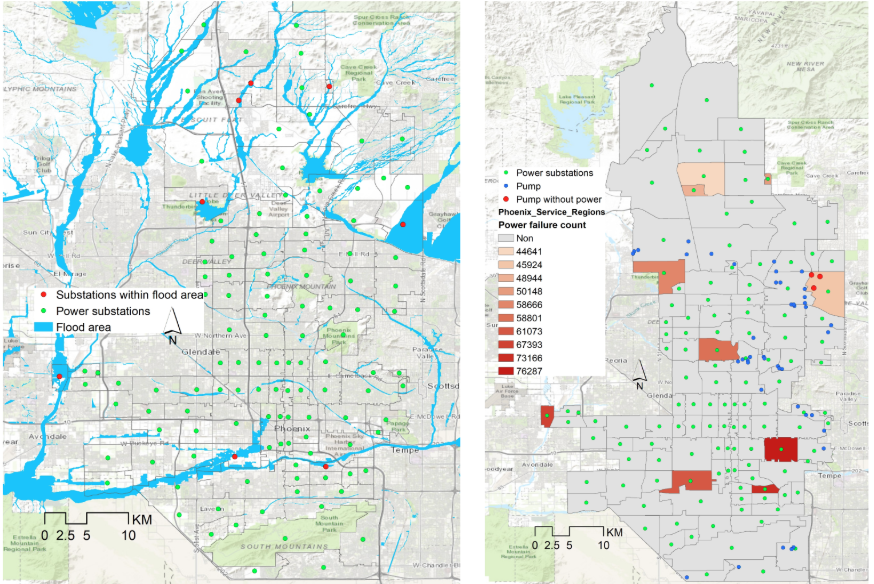
In Phoenix, fewer substations fall within current FEMA flood zones, producing more modest cascading impacts under simulated failures. Even so, the work highlighted how hazard assumptions shape outcomes and established the need for more advanced flood modeling that considers future rainfall extremes.
Download Final Report Executive Summary
Phase 2: Enhancing Resilience Of Emerging Hybrid Energy Infrastructure In Urban Systems
The next phase of this work will investigate how emerging, interconnected urban energy and transportation systems may become increasingly vulnerable as climate-driven extreme events intensify. As electrification expands and hybrid systems such as EV fleets, battery storage, and distributed energy resources become more widespread, the risk of cascading disruptions across infrastructure networks will grow. To address these challenges, the project will build advanced hybrid models that integrate real infrastructure data with synthetic network representations, enabling detailed analysis even where data gaps exist.
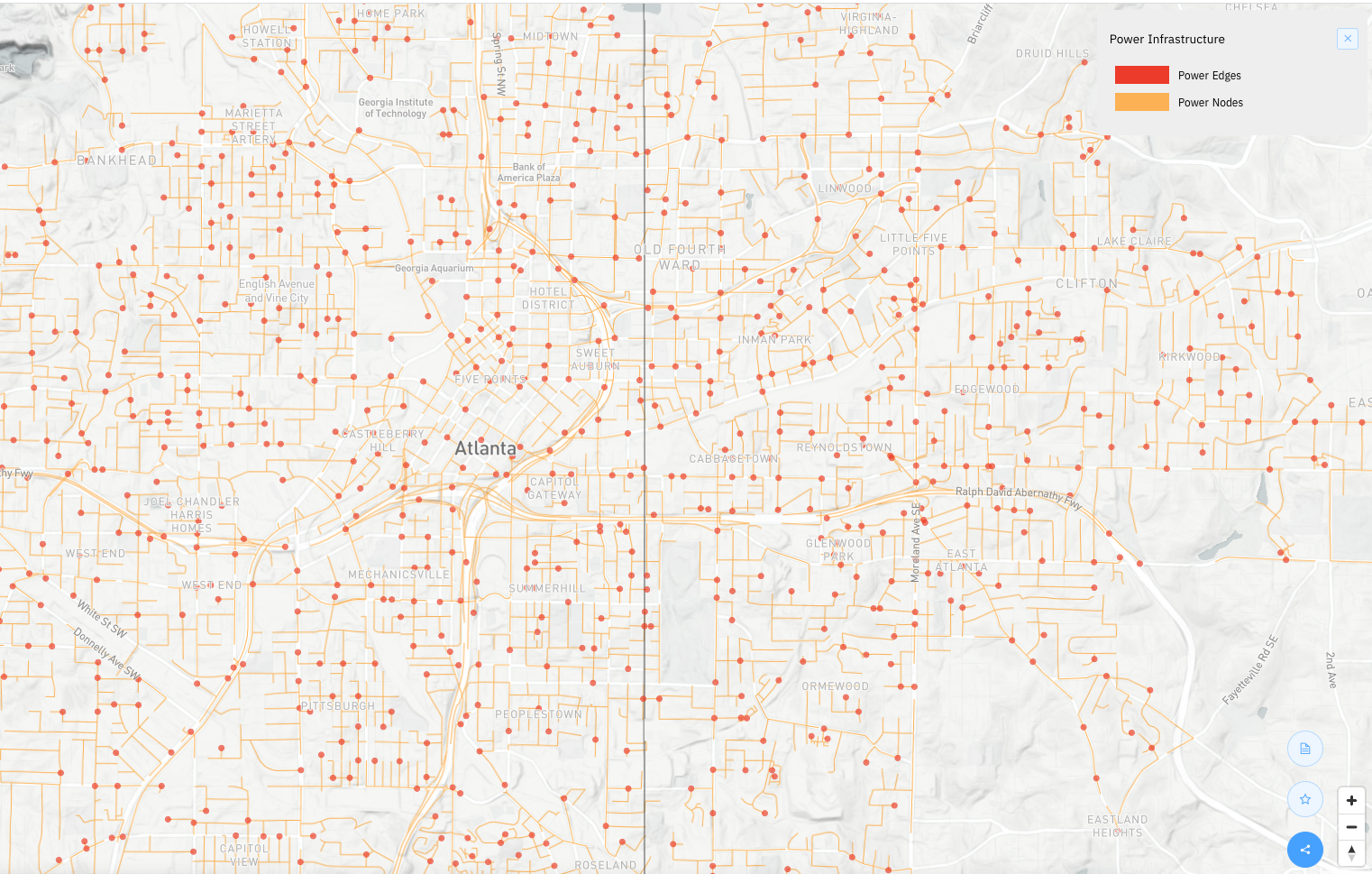
Using these hybrid models, the team will simulate extreme weather scenarios—including flooding and heatwaves—and assess how initial failures in the energy system may propagate through transportation networks in cities such as New York, Phoenix, and Atlanta, and across the Southeastern US. This work will also explore future resilience strategies, such as expanded battery storage and increasing EV adoption, to understand how emerging technologies might mitigate cascading failures and strengthen system reliability. The work will provide utilities, planners, and policymakers with evidence to anticipate failures, enhance emergency response, and inform resilience investments for a more electrified and climate-stressed urban future.